
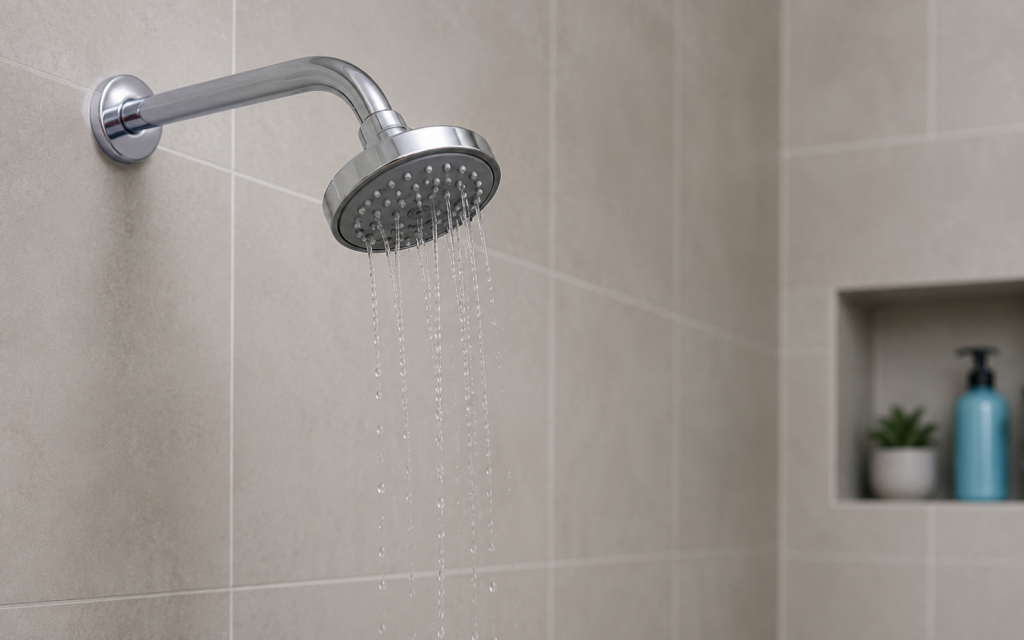
At American Home Water & Air, low water pressure is one of the most common plumbing repair calls we get from Phoenix homeowners, and it’s rarely caused by just one thing. A weak shower, a slow-filling washing machine, or water that trickles instead of flows can come from a clogged aerator, a failing pressure regulator, mineral buildup in older galvanized pipe, or even a water softener that’s overdue for service. We’ve spent more than 35 years working on plumbing systems across the Valley, and figuring out which of those it actually is, rather than guessing, is what separates a quick fix from a repeat service call.
This guide walks through what counts as low water pressure here, the most common causes we see in Phoenix homes, and when a water pressure issue is worth calling a professional rather than troubleshooting it yourself.
Most low water pressure in Phoenix homes traces back to one of four causes: mineral deposits in aging galvanized pipe, a water softener overdue for maintenance, a partially closed shutoff valve, or debris clogging a faucet aerator. The City of Phoenix Water Services Department lists these as the most common causes of reduced pressure it hears about from customers, and testing your home’s actual PSI with a simple gauge is the fastest way to tell whether the problem is isolated to one fixture or affecting the whole house.
What Counts as Low Water Pressure in a Phoenix Home?
A Phoenix home is generally considered to have low water pressure when it reads below 40 PSI (pounds per square inch) at the main. The City of Phoenix treats 40 to 100 PSI as an acceptable delivery range under its Design Standards Manual for Water and Wastewater, meaning pressure anywhere in that band is considered normal for the city’s distribution system. That’s a wider range than what’s considered ideal for a home’s internal plumbing, though. The EPA’s WaterSense program recommends keeping incoming service pressure between 45 and 60 PSI for the most efficient use of water and the best performance from fixtures and appliances, even when the municipal supply is delivering more than that.
In practice, this means a reading in the low 40s might be technically within the city’s acceptable range while still feeling weak at a showerhead, especially in a two-story home or one with older, narrower supply lines. Testing your own pressure takes about five minutes with an inexpensive gauge attached to an outdoor hose bibb, with every other fixture in the house turned off.
- The City of Phoenix considers 40 to 100 PSI an acceptable delivery range for residential water service.
- The EPA’s WaterSense program recommends 45 to 60 PSI as the optimal range for household fixtures and appliances.
- Pressure above 80 PSI typically requires a pressure-reducing valve (PRV) on the customer’s side of the meter under most plumbing codes.
- The City of Phoenix lists mineral deposits in galvanized plumbing, an unmaintained water softener, a partially closed house valve, and debris in aerator screens as its most common causes of reduced pressure.
- Fluctuations during peak-demand hours, like early mornings when everyone’s showering, are normal and don’t necessarily indicate a plumbing problem.
Common Causes of Water Pressure Issues in Phoenix Homes
The causes behind water pressure issues generally fall into two categories: something restricting flow inside the home, or something affecting the water before it even reaches your fixtures.
Mineral buildup in older pipe. Phoenix’s naturally hard water leaves mineral deposits behind over time, and in homes with galvanized plumbing, that buildup narrows the interior of the pipe until flow noticeably drops. This is one of the most common causes the City of Phoenix cites for reduced pressure, and it tends to show up gradually rather than all at once.
A water softener due for maintenance. A softener that isn’t regenerating properly, or one with a clogged resin bed, can restrict flow through the whole house rather than improving it. If you’re not sure whether a softener is actually helping your water quality or working against your plumbing, comparing reverse osmosis systems and water softeners is a useful next step before deciding on a fix.
A partially closed shutoff valve. This sounds simple, but it’s one of the more overlooked causes we run into, particularly after any recent plumbing work, a fixture replacement, or a DIY repair where a valve wasn’t fully reopened afterward.
Clogged aerator screens. If low pressure is isolated to one or two fixtures rather than the whole house, mineral deposits or debris trapped in the aerator screen at the tip of a faucet is often the simplest explanation, and the easiest to fix.
A failing or misadjusted pressure regulator. Pressure regulators typically last 10 to 15 years. As they age, they can fail in either direction, letting pressure climb too high or dropping it well below what your home needs.
When Should We Call a Plumber for Water Pressure Issues?
A whole-house pressure drop, rather than an issue with a single fixture, is the clearest sign it’s time to call a professional rather than keep troubleshooting on your own. If a pressure test at an outdoor hose bibb reads consistently below 40 PSI, or if pressure has dropped noticeably compared to how the home used to perform, that points to something systemic, whether that’s failing pipe, a struggling regulator, or a softener that needs service, rather than something you can fix by cleaning one faucet aerator. A licensed plumber can pressure-test the system, rule out causes on the city’s side of the meter, and identify whether the fix is a regulator replacement, pipe repair, or softener servicing.
Water Pressure Support Across the Phoenix Metro
We work with homeowners throughout Phoenix, Scottsdale, Tempe, Mesa, and Glendale, and while water pressure standards are broadly similar across the Valley, the specific delivery pressure a home receives depends on its water provider, its elevation relative to that provider’s storage tanks, and how far it sits from a pressure zone boundary. The City of Phoenix, Scottsdale Water, and other Valley municipal utilities each publish their own design standards for acceptable delivery pressure, so a home’s baseline PSI can vary meaningfully even between two neighborhoods a few miles apart. Older homes in central Phoenix and parts of Tempe, where galvanized plumbing is more common, tend to see pressure problems tied to mineral buildup more often than newer construction in the East Valley, which typically has modern PEX or copper supply lines.
Can a Water Softener Cause Low Water Pressure?
Yes, a water softener that isn’t properly maintained can noticeably reduce water pressure throughout a home. The City of Phoenix specifically lists an unmaintained softener among its most common causes of reduced pressure, alongside mineral buildup and valve issues. A softener works by pushing water through a resin tank, and if that resin bed is fouled, clogged, or overdue for a proper regeneration cycle, it restricts flow the same way a narrowing pipe would. This is worth checking before assuming the problem lies elsewhere in the plumbing system, since a softener repair or adjustment is often a simpler fix than replacing pipe. It’s also a good item to add to a broader seasonal check, similar to how a spring AC maintenance visit catches small HVAC issues before summer, much like how restricted airflow can quietly reduce an AC unit’s cooling capacity, a softener that’s slowly fouling can reduce your home’s water pressure well before it becomes an obvious problem.
Water Pressure FAQs for Phoenix Homes
What PSI is considered low water pressure in Phoenix?
Pressure below 40 PSI is generally considered low, since the City of Phoenix treats 40 to 100 PSI as its acceptable delivery range. The EPA’s WaterSense program recommends 45 to 60 PSI as the more efficient target range for a home’s internal plumbing and fixtures.
What are the most common causes of low water pressure in Phoenix homes?
The City of Phoenix identifies mineral deposits in galvanized plumbing, an unmaintained water softener, a partially closed house valve, and debris in aerator screens as its most common causes. A failing pressure regulator is another frequent cause, particularly in homes where the regulator is more than 10 to 15 years old.
Can a water softener cause low water pressure?
Yes, a water softener with a clogged or fouled resin bed can restrict water flow throughout an entire home. The City of Phoenix lists softener maintenance issues among the most common causes of reduced residential water pressure.
Should we test our home’s water pressure ourselves?
Yes, testing water pressure with an inexpensive gauge attached to an outdoor hose bibb is a simple first step that takes about five minutes. Turn off every other fixture in the home before testing to get an accurate static pressure reading.
When should we call a plumber about low water pressure?
Call a plumber when low pressure affects the entire house rather than a single fixture, or when a pressure test reads consistently below 40 PSI. Whole-house pressure drops usually point to a systemic cause, like failing pipe, a worn regulator, or a softener needing service, that a DIY fix won’t resolve.
Further Reading & References
- City of Phoenix Water Services Department: General Service Issues and Water Pressure
- U.S. Environmental Protection Agency WaterSense: Service Water Pressure Technical Fact Sheet
Schedule Plumbing Service for Low Water Pressure
Low water pressure in a Phoenix home is almost always fixable once you know what’s actually causing it, whether that’s mineral buildup, a valve, an aerator, or a softener overdue for attention. At American Home Water & Air, we’ve been diagnosing and repairing water pressure issues for homeowners across Phoenix, Scottsdale, Tempe, Mesa, and Glendale for more than 35 years, and a proper pressure test is always where we start. If your home’s water pressure isn’t what it used to be, schedule plumbing service with our team and we’ll help you find the actual cause.
Related Posts